
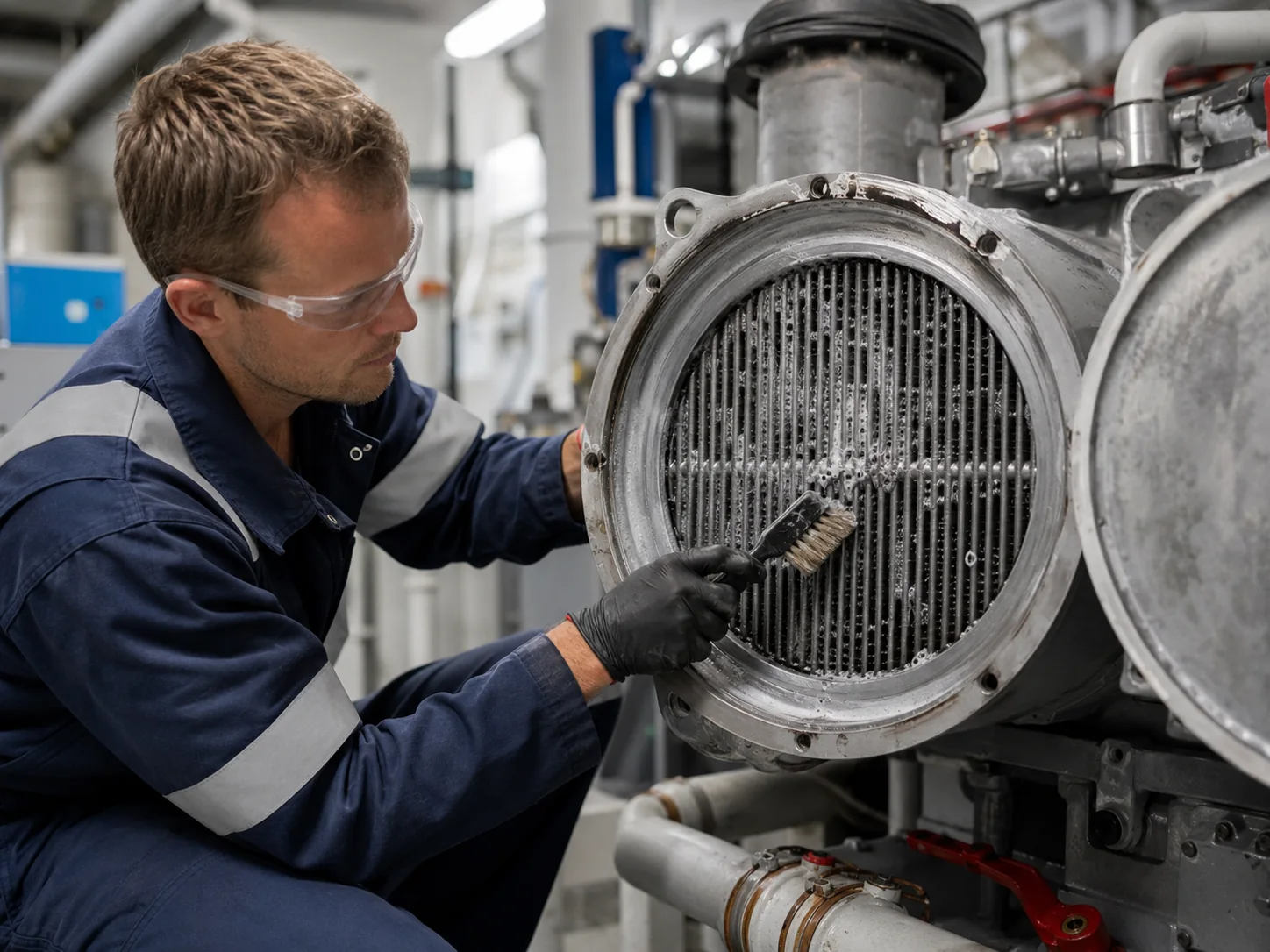
Proper air cooler maintenance helps maintain heat transfer, airflow, and equipment performance. Learn the key inspection, cleaning, and preventive maintenance practices.

Article Summary22 sections
Air coolers play an important role in controlling the operating temperature of industrial equipment. Their performance depends heavily on effective heat transfer through the heat exchanger and unrestricted airflow across the fins and tubes.
Over time, dust, oil mist, grease, process residue, and environmental contaminants can accumulate on heat-transfer surfaces. If left uncontrolled, these deposits may restrict airflow and reduce the effectiveness of heat transfer.
Understanding proper industrial air cooler maintenance is therefore essential for maintaining equipment performance, reliability, and operational efficiency.
Key Areas to Check During Air Cooler Maintenance
| Inspection Area | Potential Issue | Recommended Action |
|---|---|---|
| Fins and tubes | Dust, oil, grease, and deposits may restrict heat transfer. | Inspect and clean according to the type of contamination. |
| Fan | Reduced airflow or abnormal vibration. | Inspect blades, alignment, mounting, and vibration. |
| Motor and drive | Overheating, vibration, or reduced performance. | Check motor, bearing, belts, coupling, and operating parameters. |
| Surrounding area | Obstructed inlet or discharge airflow. | Keep the area around the cooler clear. |
Why Does an Air Cooler Need Regular Maintenance?
An air cooler transfers heat from the process fluid to ambient air. For effective heat transfer, air must move freely through the fin and tube surfaces.
Dust, oil residue, and other contamination can create an insulating layer on these surfaces. As fouling increases, cooling performance may gradually decline and operating temperatures may become more difficult to maintain.
Signs That an Air Cooler Needs Maintenance
- Higher outlet temperature than normal.
- Changes in the expected temperature differential.
- Visible dust, oil mist, grease, or process residue on the fins.
- Reduced airflow.
- Abnormal fan or motor vibration.
- Increasing noise from fan or bearing components.
- Changes in energy consumption without a significant process-load increase.
How to Maintain an Industrial Air Cooler
1. Perform Routine Visual Inspections
Inspect the fins, tubes, fan, guard, motor, and surrounding area regularly. Look for heavy dust, oil residue, grease, corrosion, damaged fins, foreign materials, or anything that could restrict airflow.
2. Clean the Fins and Heat-Transfer Surfaces
Fins are particularly susceptible to contamination. Dust mixed with oil mist can form a sticky layer that is more difficult to remove than dry dust.
Depending on the contamination and equipment design, cleaning may involve compressed air, controlled water cleaning, or an industrial air cooler cleaner compatible with the equipment materials.
3. Avoid Excessive Cleaning Pressure
Water or compressed air applied at excessive pressure can bend or damage fins. Damaged fins may restrict airflow and reduce heat-exchanger effectiveness.
Always follow the equipment manufacturer's recommendations regarding cleaning pressure, distance, and direction.
4. Inspect the Fan
The fan provides the airflow required for cooling. Dirty, damaged, unbalanced, or misaligned blades may reduce airflow and contribute to abnormal vibration.
Inspect the blade condition, mounting, shaft, bearing, guard, and direction of rotation. Abnormal vibration should be investigated before continued operation.
5. Check the Motor and Drive System
Motors, bearings, belts, pulleys, and couplings should be inspected according to the maintenance plan. Monitor motor temperature, vibration, noise, belt tension, and signs of mechanical wear.
6. Keep the Airflow Path Clear
Materials, covers, temporary structures, or stored items around an air cooler can obstruct the inlet or discharge airflow. Maintain the clearance recommended for the equipment.
How to Clean an Air Cooler Safely
- Shut down and isolate the equipment according to approved procedures.
- Inspect the surface to determine the type and severity of contamination.
- Remove loose dirt and debris.
- Select an appropriate cleaning method.
- Apply chemical cleaner at the recommended concentration when required.
- Observe the recommended contact time.
- Rinse when specified by the product instructions.
- Inspect the fins and heat exchanger after cleaning.
- Ensure the equipment is dry and safe before returning it to service.
Selecting a Chemical Cleaner for an Air Cooler
Cleaning performance should not be the only consideration when selecting a chemical. Material compatibility is equally important because air coolers may contain aluminium, copper, carbon steel, stainless steel, coatings, seals, or combinations of different materials.
| Consideration | What to Check |
|---|---|
| Deposit type | Dust, oil, grease, process residue, or mixed contamination. |
| Material | Confirm compatibility with fins, tubes, coatings, seals, and surrounding components. |
| Concentration | Follow the dilution ratio stated in the product TDS. |
| Safety | Review SDS, PPE, ventilation, rinsing, handling, and disposal requirements. |
How Often Should an Air Cooler Be Cleaned?
There is no universal cleaning interval for industrial air coolers. The appropriate frequency depends on operating environment, contamination level, process conditions, operating hours, equipment design, and maintenance history.
Equipment exposed to heavy dust, oil mist, or process contamination may require more frequent inspection than equipment operating in a relatively clean environment.
Condition-based inspection and performance trending are therefore often more useful than relying on a fixed calendar schedule alone.
Common Air Cooler Maintenance Mistakes
- Waiting for major performance loss before cleaning.
- Using excessive water pressure directly on the fins.
- Applying chemicals without checking material compatibility.
- Skipping rinsing when it is required.
- Cleaning while the fan can still operate.
- Ignoring abnormal vibration or noise.
- Removing contamination without investigating why it repeatedly returns.
Air Cooler Cleaners for Industrial Maintenance
When oil, grease, dirt, or process residue cannot be effectively removed using routine dry cleaning, a dedicated chemical cleaner may help improve the cleaning process.
Yume Global Indonesia provides industrial cleaning solutions including air cooler cleaners for maintenance applications. Products such as Synestra Air Cooler Cleaner and NEO Air Cooler Cleaner can be considered according to the type of contamination, equipment materials, and application requirements.
Conclusion
Proper air cooler maintenance helps maintain consistent airflow and heat-transfer performance. Effective maintenance should include routine inspection, fin and tube cleaning, fan and motor checks, airflow management, and the correct cleaning method.
By combining preventive maintenance with condition monitoring, industrial operators can identify performance deterioration earlier and reduce the likelihood of unexpected cooling-related problems.
Frequently Asked Questions
What causes an air cooler to lose cooling performance?
Possible causes include contaminated fins, reduced airflow, fan problems, motor or drive issues, changes in ambient temperature, or changes in process conditions.
Can high-pressure water be used to clean air cooler fins?
Excessive pressure should be avoided because it may bend or damage the fins. Follow the equipment manufacturer's recommended pressure, distance, and cleaning direction.
Are all chemical cleaners safe for aluminium fins?
No. Chemical compatibility varies by product. Always review the product TDS and material recommendations before application.
When is an air cooler chemical cleaner needed?
A chemical cleaner may be useful when oil, grease, or stubborn process contamination cannot be effectively removed using routine dry-cleaning methods.
How often should an industrial air cooler be cleaned?
There is no universal interval. Cleaning frequency should be based on operating environment, fouling level, operating hours, maintenance history, and actual performance trends.
Published: September 15, 2026