
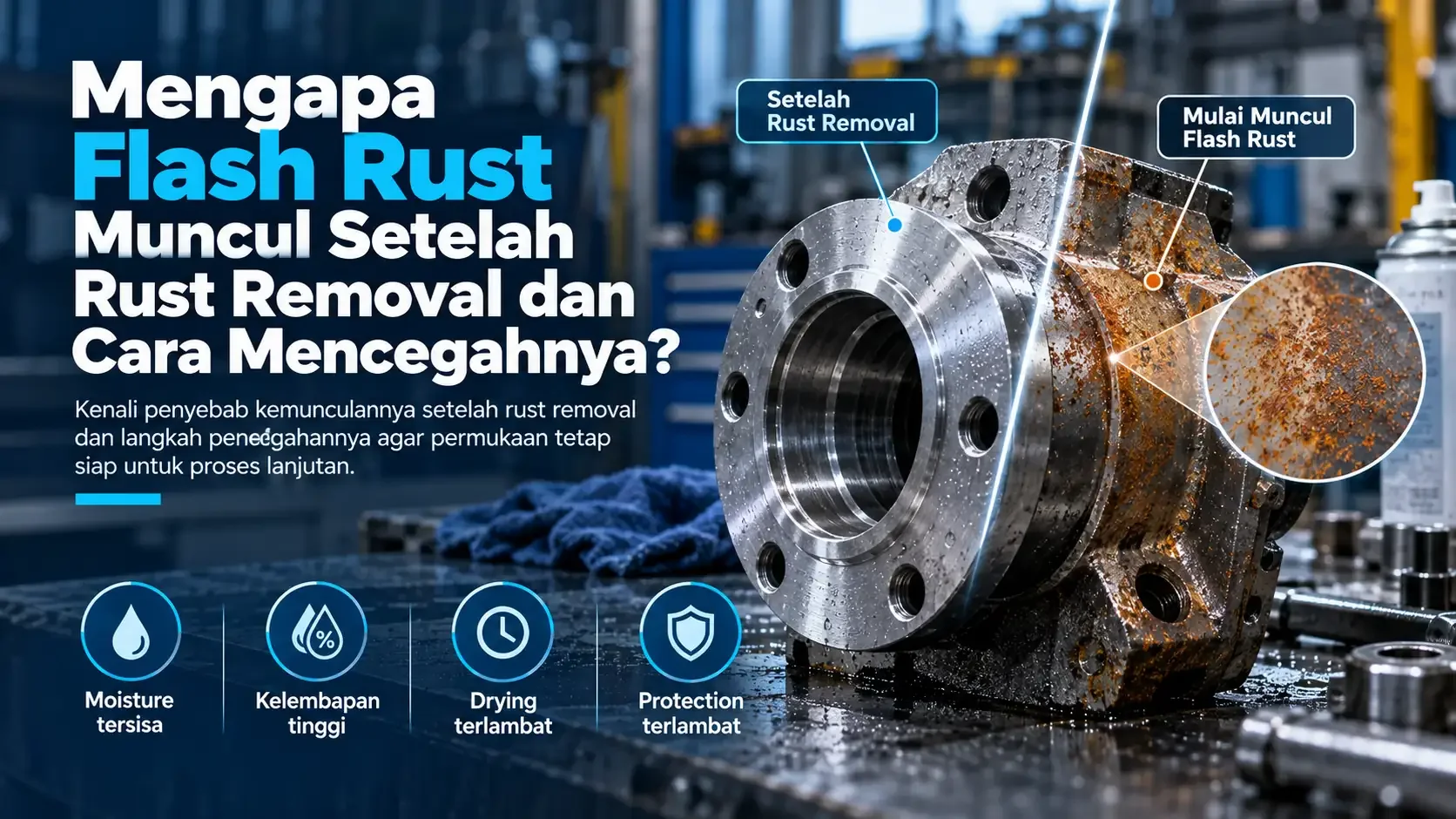
Flash rust can appear shortly after rust removal when freshly cleaned metal is exposed to moisture and oxygen. Learn the main causes and how proper drying and protection can reduce the risk.

Article Summary18 sections
Rust removal is performed to remove corrosion deposits from metal surfaces, making the substrate easier to inspect and prepare for further maintenance. However, in some situations, a thin layer of corrosion may appear again shortly after cleaning.
This condition is commonly known as flash rust. It may develop when freshly cleaned ferrous metal is exposed again to moisture, oxygen, or certain contaminants.
Understanding flash rust after rust removal is important because successful corrosion cleaning involves more than simply removing the original rust. Post-cleaning surface condition must also be controlled.
What Is Flash Rust?
Flash rust is a thin layer of corrosion that may form on iron or carbon-steel surfaces after cleaning, rinsing, wet blasting, or chemical rust removal.
It may appear as light yellow, orange, or brown discoloration on a surface that previously looked clean.
Why Does Flash Rust Form After Rust Removal?
| Factor | Potential Effect |
|---|---|
| Moisture | Residual water promotes oxidation of exposed metal. |
| High humidity | The metal surface can remain exposed to moisture in the air. |
| Salt contamination | Residual salts may accelerate corrosion. |
| Delayed drying | Bare metal remains wet for too long. |
| No surface protection | Clean metal remains exposed to oxygen and moisture. |
Freshly Cleaned Metal Is Highly Exposed
Once rust, oil, grease, and other contamination have been removed, the base metal becomes more exposed to the surrounding environment.
Carbon steel can then react again with oxygen and moisture, making the timing between cleaning, drying, and protection important.
Incomplete Drying
Residual water may remain in bolt holes, flange faces, cavities, grooves, weld areas, and other difficult-to-reach locations.
Even when the visible surface appears dry, trapped moisture can still contribute to corrosion.
High Environmental Humidity
High relative humidity increases the likelihood that moisture will remain on or return to freshly cleaned metal surfaces.
This is particularly relevant for outdoor, marine, coastal, and poorly ventilated maintenance environments.
Residual Salt Contamination
Chlorides and other salts may accelerate corrosion even when the surface looks visually clean.
This is especially important for equipment operating in marine, offshore, coastal, or cooling-water environments.
Delayed Protective Treatment
After rust removal, bare metal should generally not remain exposed longer than necessary.
The longer the surface is exposed to moisture and oxygen, the greater the opportunity for oxidation to begin again.
How to Reduce the Risk of Flash Rust
Follow the rust remover manufacturer's rinsing instructions, remove residual contamination, and dry the surface promptly.
Pay particular attention to areas that can retain water and control environmental conditions where practical.
If coating or assembly will not take place immediately, an appropriate temporary protection method may be considered according to maintenance requirements.
What Should Be Done If Flash Rust Has Already Appeared?
The required action depends on the severity of the flash rust and the next process planned for the component.
Very light discoloration may fall within certain project or coating acceptance criteria, while heavier flash rust may require additional surface cleaning.
Always follow the applicable inspection requirement, coating specification, and manufacturer recommendation.
Flash Rust Prevention Checklist
| Stage | What to Confirm |
|---|---|
| Cleaning | Rust, oil, grease, and contamination are controlled. |
| Rinsing | Chemical residue is removed according to the TDS. |
| Drying | No standing water or trapped moisture remains. |
| Inspection | The cleaned surface is checked before the next process. |
| Protection | Coating or temporary corrosion protection is applied when required. |
Industrial Rust Removal Solutions
An effective rust-removal process begins with selecting the appropriate cleaner and ends with correct post-cleaning surface treatment.
Yume Global Indonesia provides industrial rust removal solutions, including Chromax Rust Remover and NEO Rust Remover RR-710.
Product selection, concentration, contact time, rinsing, and post-cleaning procedures should follow the TDS, SDS, material compatibility requirements, and actual equipment conditions.
Conclusion
Flash rust can form when freshly cleaned metal reacts again with moisture and oxygen.
Incomplete drying, high humidity, residual salts, and delayed surface protection may increase the likelihood of new corrosion appearing.
Rust removal should therefore not end when the original corrosion disappears. Rinsing, drying, inspection, environmental control, and post-cleaning protection are also important parts of effective corrosion maintenance.
Frequently Asked Questions
Does flash rust mean the rust remover failed?
Not necessarily. The original corrosion may have been removed successfully, while new oxidation formed after the metal was exposed again to moisture and oxygen.
How quickly can flash rust appear?
It depends on surface condition, humidity, contamination, temperature, and the surrounding environment. Under certain conditions, discoloration may appear relatively soon after cleaning.
Can a flash-rusted surface still be painted?
It depends on the severity of the flash rust and the requirements of the coating system. The surface should be inspected before coating is applied.
Is drying enough to prevent flash rust?
Drying is important, but humidity, salt contamination, and post-cleaning protection also need to be considered.
How can flash rust be reduced?
Use proper rinsing, dry the surface promptly, remove trapped water, control environmental conditions where possible, and apply the required protective treatment.
Published: September 17, 2026