
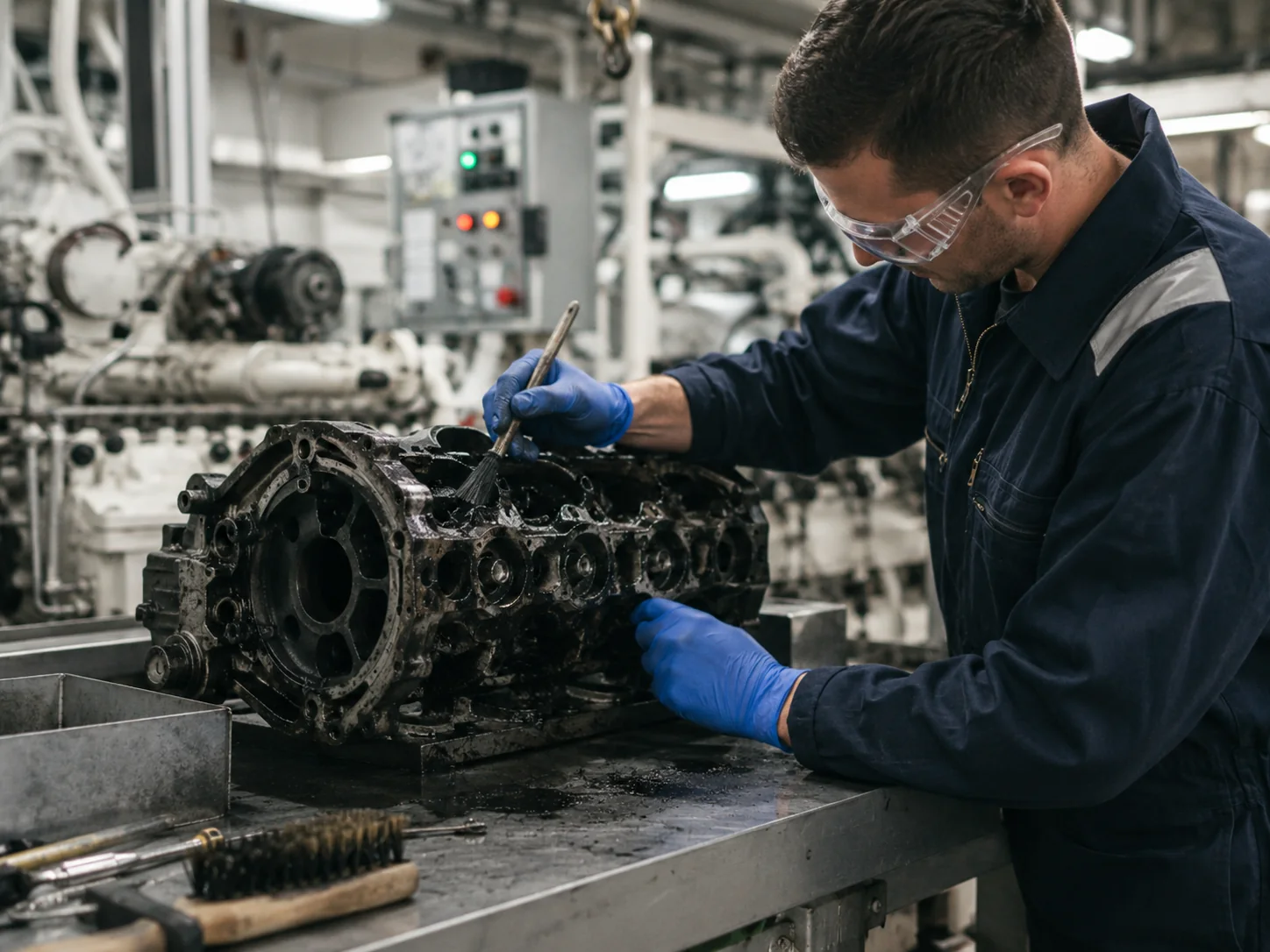
Carbon deposits can reduce combustion efficiency, affect engine performance, and increase maintenance requirements. Learn their causes, effects, and proper prevention and cleaning methods.

Article Summary23 sections
Industrial engine performance is influenced by more than equipment age or preventive maintenance schedules. The cleanliness of internal components also plays an important role in maintaining efficiency, reliability, and service life. One condition frequently encountered in combustion-based equipment is the formation of carbon deposits.
When carbon deposits continue to accumulate, they may affect combustion quality, heat transfer, airflow, and the response of critical engine components. Understanding carbon deposits in industrial engines is therefore an important part of an effective maintenance strategy.
Key Factors to Consider
Before starting a cleaning process, maintenance teams should understand both the condition of the deposit and the reason it formed. Effective maintenance should not only remove contamination but also help prevent the same condition from returning.
| Condition | Potential Impact | Recommended Action |
|---|---|---|
| Carbon buildup | May reduce combustion efficiency and engine performance. | Inspect and clean components based on actual condition. |
| Hardened deposits | Cleaning may become more difficult and time consuming. | Avoid waiting until deposits become excessively thick. |
| Poor combustion | Deposits may return even after cleaning. | Perform root-cause analysis of the fuel and combustion systems. |
| Chemical selection | An unsuitable cleaner may affect component materials. | Review material compatibility, TDS, and SDS before application. |
What Are Carbon Deposits?
Carbon deposits are layers or hardened residues formed from combustion by-products that accumulate on engine surfaces. They may result from incomplete fuel combustion, lubricant residue, contamination, fuel characteristics, operating temperatures, or combustion-system conditions.
At an early stage, deposits may appear as a thin black or brown layer. When repeatedly exposed to heat without being removed, the layer can become thicker, harder, and more strongly bonded to the component surface.
Deposit characteristics can differ significantly between machines. For this reason, a cleaning method should not be selected solely based on visual appearance. Component material, operating temperature, contamination level, and chemical application method should also be evaluated.
Where Are Carbon Deposits Commonly Found?
In combustion-based industrial equipment, carbon deposits are commonly found in areas exposed directly to combustion, fuel flow, air movement, or exhaust gases.
- Combustion chambers.
- Pistons and piston crowns.
- Valves and valve seats.
- Fuel injectors and selected fuel-system components.
- Exhaust manifolds and exhaust passages.
- Turbochargers in applicable engine configurations.
- Other components continuously exposed to combustion residue.
What Causes Carbon Deposits?
1. Incomplete Combustion
When the air-fuel ratio is not optimal, part of the fuel may fail to burn completely. Combustion residue can then accumulate on surfaces inside the combustion area.
2. Fuel Quality
Fuel characteristics directly influence combustion. Contamination, unsuitable fuel specifications, or improper storage conditions may increase the formation of combustion residues.
3. Fuel-System Condition
Injectors or fuel-delivery systems that are not operating correctly may affect spray patterns and fuel atomization. This may result in uneven combustion and faster deposit formation.
4. Lubricant Residue
Under certain operating conditions, lubricant may enter the combustion area and burn with the fuel. The resulting residue can contribute to carbon accumulation.
5. Operating Temperature
Engines operating continuously outside their intended temperature or load range may experience changes in combustion quality. Unstable operating conditions can also promote deposit formation in specific areas.
How Carbon Deposits Affect Engine Performance
Excessive carbon deposits can create several operational issues. The effects are not always immediate. In many cases, performance deteriorates gradually until changes in fuel consumption, operating temperature, emissions, or maintenance frequency become noticeable.
| Performance Area | Potential Effect |
|---|---|
| Combustion efficiency | The combustion process may become less efficient. |
| Fuel consumption | More fuel may be required to produce the same output. |
| Temperature | Deposits may affect heat-transfer characteristics in certain areas. |
| Maintenance | Inspection and cleaning may be required more frequently. |
| Reliability | Heavy deposits may increase the risk of component-related problems. |
When Should Carbon Deposits Be Removed?
There is no single cleaning interval suitable for every engine. Cleaning frequency should be based on the manufacturer's recommendations, operating conditions, maintenance history, inspection results, and actual deposit severity.
Indicators that may justify further inspection include reduced engine performance, increased fuel consumption, unusual operating temperatures, changes in exhaust conditions, or visible carbon buildup during scheduled maintenance.
How to Prevent and Control Carbon Buildup
Perform Preventive Inspections
Routine inspection allows maintenance teams to monitor deposit development before the layer becomes excessively thick or hardened. Inspection records can also help determine more effective cleaning intervals.
Maintain the Fuel System
Injector condition, fuel pressure, filters, and related components should be maintained within the manufacturer's specifications. A properly functioning fuel system supports more consistent combustion.
Use the Correct Fuel and Lubricant
Using fuel and lubricant that meet the engine manufacturer's specifications can help maintain stable engine operation and reduce unnecessary residue formation.
Select an Appropriate Cleaning Method
For deposits that have already formed, mechanical cleaning or an industrial carbon remover may be considered depending on deposit characteristics and component materials.
Before applying a chemical cleaner, always review its Technical Data Sheet (TDS), Safety Data Sheet (SDS), material compatibility, recommended concentration, contact time, rinsing procedure, and application method.
Selecting a Carbon Remover for Industrial Applications
Industrial carbon removers are designed to help loosen or dissolve carbon residue, oil contamination, varnish, and selected process deposits so that components can be cleaned more effectively. However, cleaning strength should not be the only factor considered when selecting a product.
Maintenance teams should also consider the component material, deposit severity, application temperature, soaking or circulation method, contact time, rinsing requirements, and workplace safety procedures.
Conclusion
Carbon deposits are common in equipment involving combustion processes. When excessive buildup is left uncontrolled, however, it can affect combustion efficiency, engine performance, reliability, and maintenance requirements.
The most effective approach is not simply to clean the engine after heavy deposits have developed. Preventive inspection, operating-condition control, fuel-system maintenance, and the correct cleaning method should work together as part of a planned maintenance program.
By understanding why carbon deposits form and managing them proactively, industrial operators can help maintain more consistent engine performance while reducing the likelihood of unexpected operational problems.
Frequently Asked Questions
Do carbon deposits always indicate engine damage?
No. A certain level of deposit formation may occur during normal operation. However, excessive or unusually rapid buildup may indicate combustion, fuel-system, lubrication, or operating-condition issues that require further investigation.
Can every carbon deposit be removed using chemicals?
Not necessarily. The appropriate cleaning method depends on deposit type, deposit hardness, component material, and manufacturer recommendations. Some applications may require a combination of chemical and mechanical cleaning.
Why do carbon deposits return after cleaning?
Cleaning removes existing deposits but does not automatically eliminate their root cause. If combustion, fuel-system, temperature, or contamination issues remain, carbon deposits can form again.
What should be checked before choosing a carbon remover?
Review material compatibility, deposit type, application method, concentration, contact time, TDS, SDS, and the recommended rinsing and disposal procedures.
Published: September 15, 2026